
Why We Shouldn’t Be Afraid of Artificial Intelligence
Many people are afraid of artificial intelligence (AI). They see it as a threat to jobs, creativity, or even humanity itself. Yet this fear is often based on a misunderstanding of what the human mind truly is – and what AI can actually do.
American author David Brooks captured it perfectly in The New York Times:
“Many fears about AI underestimate the human mind. AI may generate words, images, or patterns – but it doesn’t understand what it’s doing.”
Human Thinking Is Not an Algorithm
Humans are not computers. Our thinking is not pure data processing. It is a blend of conscious and unconscious, logic and intuition, emotion and experience. We reflect, love, mourn, doubt, and seek meaning – things no machine can ever truly replicate.
Neuroscientists themselves admit: we still don’t really know how humans think. So when someone claims a machine can “think like a human,” it’s more wishful thinking than reality.
AI Complements Us – It Doesn’t Replace Us
AI can write texts, analyze data, and detect patterns. But it doesn’t live, it doesn’t feel, and it bears no responsibility. It has no consciousness, no morality, no personal story.
That means AI will not replace us – it will complement us. It can free us from repetitive, dull tasks – like drafting standard documents, conducting research, or analyzing data – giving us more time to act humanly: to advise, create, lead, and learn.
The Democratization of Knowledge
Brooks sees in AI a chance to democratize knowledge and education.
Studies show that AI often helps less experienced employees more than experts. Those facing linguistic or technical barriers – for example, immigrants – can use AI to reach a higher level faster.
Thus, AI can reduce inequality, increase productivity, and broaden access to expertise (e.g., in law, medicine, or education).
AI Reminds Us What Makes Us Human
Ultimately, Brooks writes, AI will remind us who we really are – by showing us what it cannot do.
It will push us to nurture our uniquely human strengths:
- caring for one another,
- being good teammates,
- reading and thinking deeply,
- exploring boldly,
- growing spiritually,
- enjoying life.
As the poet John Keats said:
“I am certain of nothing but of the holiness of the Heart’s affections and the truth of Imagination.”
Conclusion
Artificial intelligence is not a replacement for human intelligence – it is a mirror.
A mirror that shows how unique our thinking, feeling, and acting truly are.
And perhaps that is the most beautiful form of “progress”:
that machines might teach us once again to be human.
How Far Are We from Human-Level Intelligence?
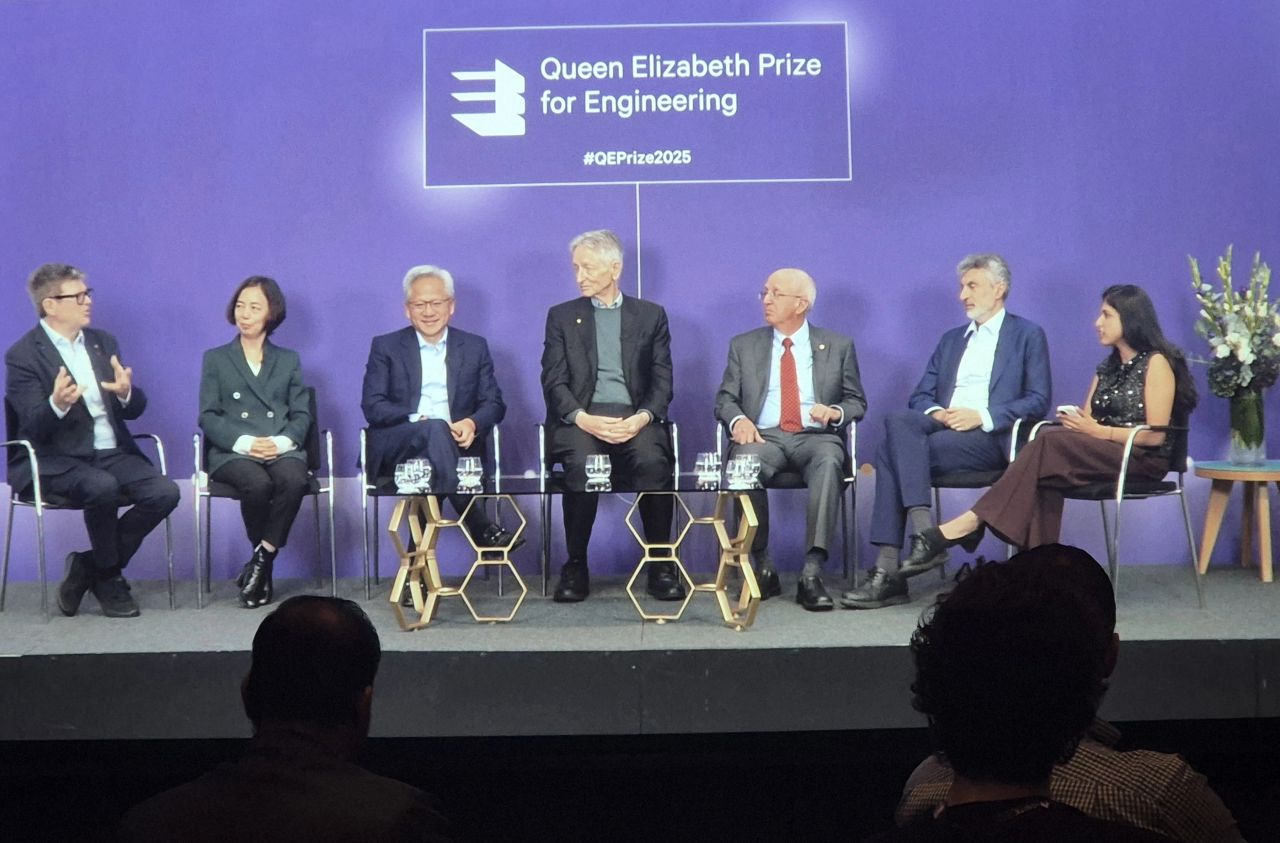
Six leading figures in AI shared their views at the #FTFutureofAI conference:
Yann LeCun: “It will not be a single event. It will be a gradual process.”
Fei-Fei Li: “Parts of AI will surpass human intelligence (or already have), others will never be comparable – they are built for different purposes.”
Jensen Huang: “We already have enough technological progress today to turn it into socially useful applications in the coming years.”
Geoffrey Hinton: “If we define it as ‘AI will always win a debate against you’ – then less than 20 years.”
Bill Dally: “That’s the wrong question! The goal is not to build AI to replace humans, but to augment them, to complement what they cannot do. Uniquely human skills that will remain: creativity, empathy, and the ability to interact with others.”
Yoshua Bengio: “There is no conceptual reason why we could never build human-level intelligence – but great uncertainty remains about the timeline.”
